Across the flat, green floodplains of northern Bangladesh lies Badalgachhi, an upazila in the Naogaon District defined by ancient history and serene rural living. For centuries, this region served as a center of Buddhist scholarship, monastic life, and trade across the historic Varendra region. Today, Badalgachhi attracts travelers, history enthusiasts, and cultural explorers seeking authentic heritage and rural landscapes.
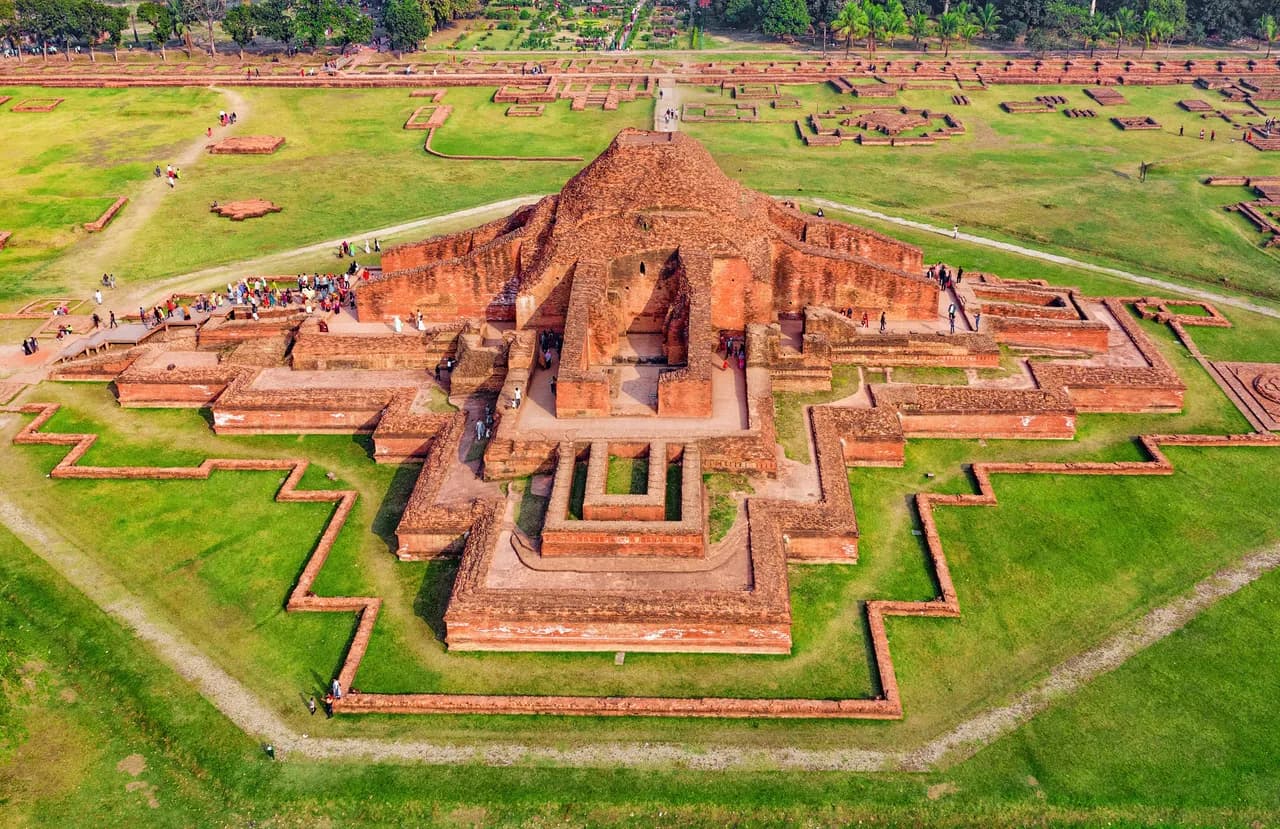
At the heart of Badalgachhi stands Somapura Mahavihara in Paharpur, a UNESCO World Heritage Site that represents one of the most important monastic complexes built in South Asia during the Pala Dynasty. Beyond this grand monument, Badalgachhi offers additional archaeological mounds like Halud Vihara, quiet river channels, agricultural fields, and traditional village life. Whether planning a weekend getaway from Rajshahi or Bogura or embarking on an archaeological journey through Bangladesh, Badalgachhi provides an accessible getaway into the ancient past.
Where is Badalgachhi
Badalgachhi is an administrative upazila situated in the northern portion of Naogaon District within the Rajshahi Division of northwestern Bangladesh. Geographically, it is located between latitudes 24°53′ and 25°05′ North and longitudes 88°51′ and 89°01′ East.
The upazila is bordered by Dhamoirhat and Joypurhat Sadar upazilas to the north, Naogaon Sadar Upazila to the south, Akkelpur Upazila of Joypurhat District to the east, and Mahadevpur Upazila to the west. Badalgachhi Sadar sits approximately 23 kilometers north of Naogaon town and about 280 kilometers northwest of Dhaka. The regional landscape is shaped by the gentle flows of the Little Jamuna and Tulshiganga rivers, which meander through its alluvial plains.
Overview
Badalgachhi occupies a special place in the cultural geography of Bangladesh. While predominantly agrarian, its historical weight far exceeds its geographic boundary. The upazila covers an area of roughly 213 square kilometers, divided into eight union parishads.
The area is celebrated for its fertile agricultural land, yielding bountiful rice harvests, seasonal vegetables, and mangoes. However, its primary claim to international fame is the Paharpur Buddhist Vihara (Somapura Mahavihara), which draws domestic and international visitors year-round. Badalgachhi maintains an unhurried, welcoming rural atmosphere where visitors can experience warm local hospitality alongside ancient architecture.
History and Background
The history of Badalgachhi is interwoven with the rise and fall of the Pala Empire, which ruled Bengal and Magadha from the 8th to the 12th century CE. The Pala rulers were devout patrons of Mahayana and Vajrayana Buddhism, establishing several monumental universities and monastic sanctuaries across Varendra.
During the reign of the second Pala emperor, King Dharmapala (circa 781–821 CE), construction began on Somapura Mahavihara in what is now Paharpur village. The site flourished for over four centuries as an intellectual nexus, attracting monks, scholars, and pilgrims from Tibet, China, Myanmar, and mainland India. Tibetan records specifically praise Somapura as a center for scriptural translation and philosophical discourse.
With the political shifts following the Sena Dynasty and subsequent Islamic governance in Bengal, the monastic complex gradually declined and was buried beneath accumulated earth over centuries, earning the local name "Pahar" (meaning hill or mound). Archaeological surveys initiated under the British Raj in the late 19th century and systematic excavations in the 1920s and 1930s revealed the immense brick monastery buried beneath the soil, establishing Badalgachhi as one of the premier archaeological landscapes in Asia.
Why Visit Badalgachhi
UNESCO World Heritage Landmark: Home to Somapura Mahavihara, one of the three UNESCO World Heritage Sites in Bangladesh.
Rich Archaeological Legacy: Explore ancient structural ruins, terracotta artistic reliefs, and excavated stupas dating back over 1,200 years.
Unspoiled Rural Atmosphere: Experience peaceful village life, verdant paddy fields, and natural riverine vistas away from urban congestion.
Cultural Traditions: Discover regional northern Bangladeshi customs, traditional pottery, and local open-air markets (hats).
Strategic Exploration Base: Ideally located to explore adjacent historical sites across Naogaon, Joypurhat, and Bogura districts.
Best Time to Visit
The optimal window to visit Badalgachhi spans from October through March. During these autumn and winter months, northern Bangladesh experiences mild, pleasant weather with clear skies, lower humidity, and daytime temperatures ranging between 18°C and 26°C. Walking through open-air archaeological ruins is comfortable during this period.
Early spring (late February to March) is also appealing, as local agricultural landscapes bloom with bright yellow mustard fields and vibrant green crops. The summer months (April to June) bring high heat and humidity, while the monsoon season (July to September) brings heavy rainfall that can make walking through exposed earth sites challenging, though the countryside turns exceptionally lush.
Weather and Climate
Badalgachhi experiences a tropical monsoon climate characterized by three distinct seasons:
Winter (November to February): Dry, cool, and comfortable. Early mornings can be misty, while afternoons are pleasantly sunny. Nighttime temperatures occasionally drop to 9°C to 12°C.
Summer (March to May): Warm to hot, with peak afternoon temperatures reaching 34°C to 38°C. Occasional pre-monsoon thunderstorms (Nor'westers) bring brief relief.
Monsoon (June to October): High humidity and frequent rainfall, accounting for over 80% of the annual precipitation. Rivers and canals overflow, revitalizing local wetlands.
How to Reach
Road Access
Badalgachhi is well-connected by paved highways to Naogaon town, Joypurhat, and Bogura. Direct long-distance AC and non-AC buses operate regularly from Dhaka's Gabtoli, Kalyanpur, and Mohakhali bus terminals to Naogaon Sadar and Joypurhat. From Naogaon bus stand or Muktir Mor, local buses, CNG auto-rickshaws, and private cars travel along the R547 highway directly to Badalgachhi Sadar (23 km) and Paharpur (34 km).
Railway Access
The nearest railway station to Paharpur is Jamalganj Railway Station, located just 5 kilometers away on the main northern line of Bangladesh Railway. Intercity trains running from Dhaka to Chilahati or Rajshahi (such as the Uttara Express or local passenger services) stop at Jamalganj. Alternatively, Santahar Railway Junction (approx. 30 km south) and Joypurhat Railway Station (approx. 20 km northeast) serve as major rail hubs with direct connections to Dhaka, Chattogram, and Rajshahi. From Santahar or Joypurhat, frequent auto-rickshaws and taxis transport travelers directly to Badalgachhi.
Local Transport Options
Upon arriving in Naogaon Sadar, Joypurhat, or Jamalganj, visitors can hire private microbuses, auto-rickshaws, or battery-operated electric vans (tomtoms) for direct transit to Badalgachhi's tourist sites.
Local Transportation
Getting around within Badalgachhi Upazila is straightforward:
CNG Auto-Rickshaws: Ideal for travel between Naogaon town, Badalgachhi Sadar, and Paharpur. They can be shared or reserved privately.
Electric Auto-Rickshaws (Tomtoms): Convenient for short trips between local village markets, railway stations, and nearby monuments.
Rental Taxis and Cars: Private sedans and microbuses are available for rent in Naogaon Sadar for full-day sightseeing excursions across the district.
Archaeological and Historical Heritage
The archaeological profile of Badalgachhi is dominated by Pala-era Buddhist monastic architecture. Unlike built structures made of stone, the monuments of the Varendra region were constructed primarily of locally fired red terracotta bricks set in mud mortar, decorated with hand-carved terracotta plaques.
These ancient establishments served a dual purpose: as religious sanctuaries for residential monks and as academic institutions teaching philosophy, logic, medicine, astronomy, and grammar. The spatial layout of these monasteries, featuring a monumental central temple surrounded by rows of residential cells within an enclosed quadrangle, went on to influence temple architecture across Southeast Asia, including Myanmar, Thailand, and Indonesia.
Nearby Ancient Sites
In addition to the primary monuments within Badalgachhi, the surrounding geographical belt across Naogaon and Joypurhat contains numerous ancient mounds, structural footings, and historical water reservoirs (dighis). Sites like Halud Vihara, Jagaddala Mahavihara, and historical mosques reflect centuries of cultural progression from early Buddhist-Hindu polities to the Bengal Sultanate.
Rural Landscape and Natural Beauty
Away from the archaeological parks, Badalgachhi features quiet rural beauty. The upazila is carpeted with vast expanses of emerald rice paddies, coconut palms, mango groves, and winding village roads.
The Little Jamuna and Tulshiganga rivers trace peaceful paths through the countryside, where local fishermen use traditional nets and wooden boats. In late afternoon, the flat horizons offer sweeping views of golden sunsets over open fields, providing photographers with pure countryside scenery.
Agriculture and Village Life
Agriculture is the economic pulse of Badalgachhi. The fertile soil supports three annual rice cropping cycles—Aman, Boro, and Aus. The region is also known for producing high-quality seasonal mangoes, sugarcane, potatoes, and vegetables.
Village life retains traditional rhythm. Farmers plow fields with tractors and cattle, women dry parboiled rice on open courtyards, and elders gather at tea stalls in local bazaars to discuss news. Visiting these traditional villages gives travelers a genuine look into rural life in northern Bangladesh.
Local Culture and Traditions
The culture of Badalgachhi reflects a blend of traditional Bengali Muslim, Hindu, and indigenous ethnic traditions (including Santhal and Oraon communities living in parts of Naogaon and Joypurhat). Folk music, including Baul, Bhatiali, and Bhawaiya, remains popular in rural gatherings. Artisans across local villages continue traditional practices in bamboo craft, pottery, and handloom weaving.
Religious and Cultural Landmarks
In addition to ancient Buddhist ruins, Badalgachhi and its adjacent areas feature historical mosques, Hindu temples, and shrines. Community gatherings revolve around village markets, religious centers, and seasonal harvest fairs (Mela), where people gather to trade goods, enjoy rides, and celebrate regional traditions.
Festivals and Events
Pohela Boishakh (Bengali New Year): Celebrated across Badalgachhi with traditional fairs, folk music performance, and sweet distributions.
Eid Fairs: Major annual festivities where local markets overflow with colorful stalls, traditional foods, and community gatherings.
Durga Puja: Visually vibrant Hindu celebration marked by decorated pandals and traditional rituals in Hindu villages.
Poush Mela and Winter Harvest Festivals: Winter gatherings celebrating the Boro rice harvest with fresh rice cakes (Pitha).
Shopping and Local Markets
Shopping in Badalgachhi centers on authentic local products rather than commercial malls:
Paharpur Site Market: Small shops near the entrance sell terracotta souvenirs, handmade pottery, brass miniatures, replica plaques, and local handicrafts.
Badalgachhi Sadar Bazar & Village Hats: Lively weekly markets where local farmers gather to sell fresh regional produce, hand-knitted items, bamboo goods, and traditional Bengali sweets.
Naogaon Town Shopping Centers: Located 23 km south, Naogaon town features commercial markets selling clothing, traditional Bangladeshi handlooms, and regional sweets.
Traditional Food
Food in Badalgachhi centers on fresh, wholesome Bengali home cooking. Rice served with freshwater fish curry—harvested from local rivers and ponds—is a staple. Regional specialties include:
Freshwater Fish Delicacies: Rui, Katla, Tengra, and Shol cooked with mustard paste or green chilies.
Varendra Rice Varieties: Aromatic locally grown rice paired with lentil soup (Dal) and fried eggplant or mashed vegetables (Vorta).
Naogaon Pera Sandesh: A legendary regional sweet made from condensed milk and sugar, dried to a thick firm texture. It is a prized gift across Bangladesh.
Winter Pitha: Traditional homemade rice flour pastries made with fresh date palm molasses (Khejur Gur).
TOURIST ATTRACTIONS
Attractions inside Badalgachhi
Paharpur Buddhist Vihara / Somapura Mahavihara
Overview: Somapura Mahavihara is a UNESCO World Heritage Site (designated in 1985) and one of the most famous archaeological monuments in South Asia. Covering over 27 acres, the complex consists of a vast quadrangle measuring nearly 920 feet on each side, enclosing 177 monastic cells around a towering central terraced temple.
Why Visit: To witness the pinnacle of ancient Bengal's architecture, stand before the grand central stupa, and explore the ancient living quarters of 8th-century Buddhist scholars.
Historical or Cultural Significance: Built by Emperor Dharmapala of the Pala Dynasty in the late 8th century, it was a premier university of Buddhist learning that influenced temple design across Asia for centuries.
Visitor Experience: Exploring the spacious landscaped grounds, examining hundreds of terracotta plaques along the base walls, and climbing elevated viewing platforms to appreciate the symmetry of the complex.
Photography Opportunities: Panoramic shots of the central cruciform temple from the northern entrance gateway, close-ups of terracotta reliefs depicting animals and deities, and dramatic golden-hour sunlight across ancient red bricks.
Best Season: October to March (cool, dry winter months).
Approximate Visit Duration: 2.5 to 4 hours.
Nearby Verified Accommodation Options: Archaeological Rest House Paharpur (adjacent to site); Naogaon District Circuit House, Hotel Agomoni, and Hotel Obokas (Naogaon Sadar, 23–30 km south).