

All ArticlesDestination Guide
Puthia, Rajshahi Travel Guide: Historic Palaces, Temples & Stays
N
Nasir Khan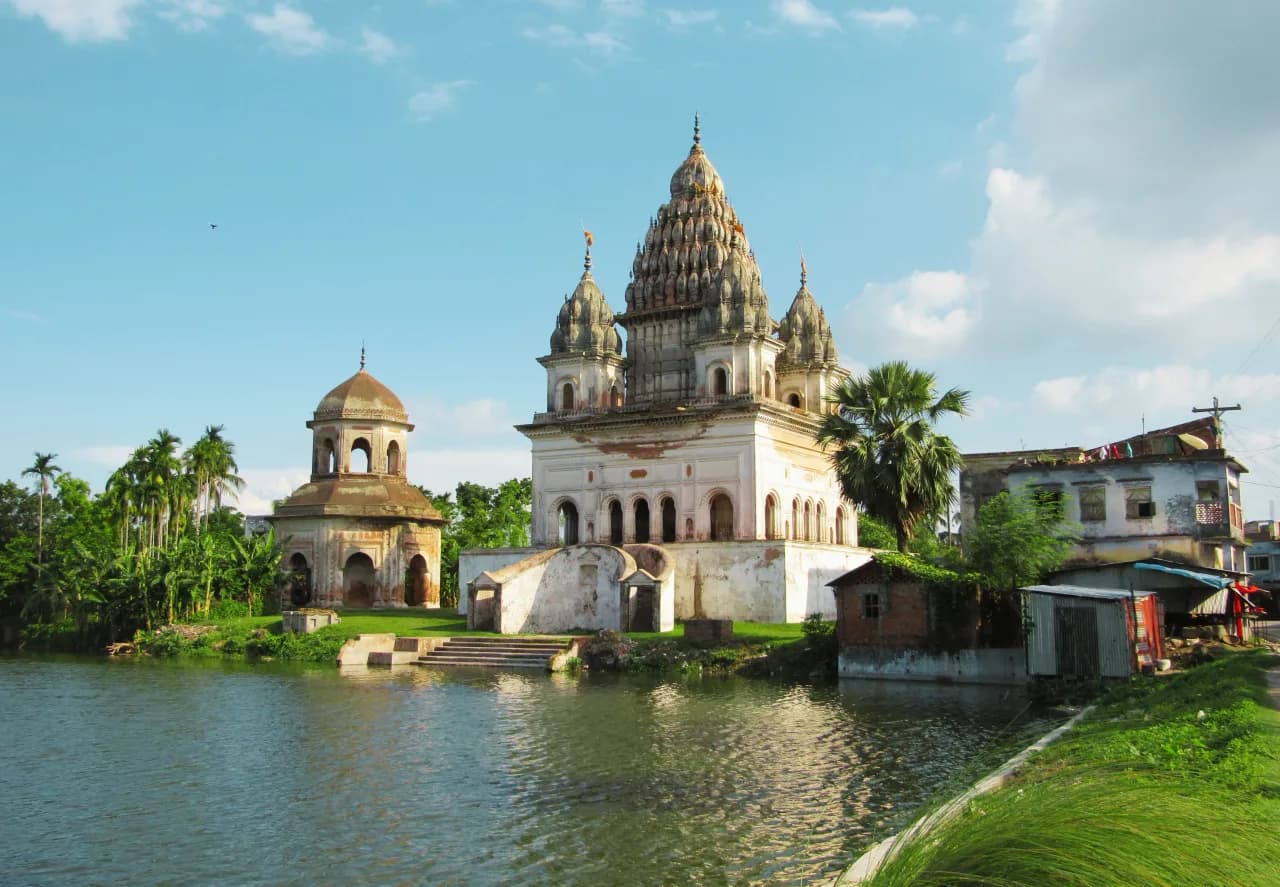
Discover Puthia, Rajshahi. Plan your journey to explore the stunning Puthia Rajbari, terracotta temples, and verified accommodations nearby. Image credit: Tanweer Morshed, Khalidrahman, RockyMasum, Tanweer Morshed,
Tucked away in the serene greenery of Rajshahi District, Puthia Upazila holds the largest concentration of historic Hindu temple architecture in Bangladesh. Known to heritage enthusiasts as the "Temple City," Puthia is an open-air sanctuary of grand neo-classical royal palaces, tranquil moat-encircled courtyards, and centuries-old terracotta temples. Built primarily between the 18th and late 19th centuries by the philanthropic zamindars of the Puthia Royal Family, this historic estate presents an extraordinary journey through Bengal's architectural, cultural, and spiritual history.
Whether you are an architecture enthusiast studying intricate terracotta reliefs, a history buff exploring the legacy of Bengal's landed aristocracy, or a traveler seeking a peaceful day trip from Rajshahi City, Puthia delivers an unmatched travel experience. Located just 30 kilometers east of Rajshahi along the primary highway, Puthia seamlessly combines deep historical resonance with effortless accessibility, making it an essential destination for any heritage itinerary in northwestern Bangladesh.
Where is Puthia
Puthia Upazila is an administrative sub-district located in the southeastern part of Rajshahi District within the Rajshahi Division of northwestern Bangladesh. Situated approximately 30 kilometers east of Rajshahi City center and around 220 kilometers northwest of the capital, Dhaka, Puthia lies directly along the N6 Dhaka-Rajshahi national highway.
The upazila is bordered by Durgapur Upazila to the north, Charghat and Bagha Upazilas to the south, Natore Sadar Upazila to the east, and Paba Upazila to the west. Its central township centers around the sprawling Puthia Rajbari complex, which is surrounded by lush agricultural fields, mango orchards, and historic water bodies.
Overview
Puthia stands as a testament to the artistic patronage of Bengal's zamindari era. Unlike fragmented historical ruins found elsewhere, Puthia offers a unified, highly concentrated cluster of historic monuments arranged around a central lawn and large rectangular water tanks known locally as dighis or sayars.
The estate contains the majestic Puthia Rajbari alongside more than a dozen distinct temples built in various classical Bengali architectural styles, including Pancharatna (five-pinnacled), Do-Chala, Chauchala (four-roofed), and Ratna designs. The surrounding countryside is dotted with peaceful villages, traditional pottery artisan settlements, and fertile farmland that reflects the gentle rhythm of rural northern Bengal.
History and Background
The history of Puthia is intertwined with the rise of the Puthia Raj family, one of the oldest and most influential zamindari estates in feudal Bengal. The estate was founded in the late 16th century during the reign of Mughal Emperor Akbar. According to historical records, the Mughal authorities granted the feudal lordship of the region to Pitambar, a respected local Brahmin scholar and administrator, establishing the dynasty's roots.
Over the succeeding centuries, the rulers of Puthia expanded their landholdings across northern Bengal and became major patrons of art, literature, education, and religious architecture. The estate produced several notable rulers and matriarchs, most notably Maharani Sarat Sundori Devi and her daughter-in-law Rani Hemanta Kumari Devi. During the 19th century, these visionary women directed substantial wealth toward public works, educational institutions, healthcare facilities, and the meticulous restoration and construction of the magnificent temples and the grand palace structure that stands today.
Following the abolition of the zamindari system under the East Bengal State Acquisition and Tenancy Act of 1950, the royal properties transitioned to government oversight. Today, the Department of Archaeology of Bangladesh maintains and preserves the core monuments as protected national heritage sites.
Why Visit Puthia
Puthia offers a rare concentration of diverse architectural styles within a compact, walkable area. Visitors can observe the transition from traditional medieval Bengali terracotta artwork to grand 19th-century European neo-classical design within a short five-minute walk across the estate grounds.
The site provides an authentic, uncrowded alternative to heavily commercialized tourist spots. The combination of reflective water tanks, towering temple spires, lush lawns, and shade-bearing trees creates a peaceful atmosphere ideal for slow travel, photography, and cultural reflection. Furthermore, its direct proximity to Rajshahi City means travelers can easily enjoy Puthia's heritage during the day while retiring to full-service hotel accommodations in the evening.
Best Time to Visit
The ideal period to plan a trip to Puthia is during the dry winter season, spanning from late October to early March. During these months, the weather remains cool, dry, and pleasant, with daytime temperatures hovering comfortably between 18°C and 26°C. Clear skies and soft golden sunlight during winter offer optimum conditions for walking around the outdoor temple grounds and capturing architectural details on camera.
Late spring (May to June) brings intense heat, but it coincides with Rajshahi's famous mango harvest season, allowing travelers to combine heritage sightseeing with sampling freshly harvested regional mango varieties. The monsoon season (July to September) transforms the countryside into a vivid landscape of deep greens and fills the historic water tanks, though heavy rainfall can occasionally interrupt outdoor exploration.
Weather and Climate
Puthia experiences a humid subtropical climate characterized by three distinct seasons: winter, summer, and monsoon.
Winter (November – February): Mild, dry, and sunny with cool mornings and evenings. Temperatures range from 10°C to 25°C.
Summer (March – June): Hot and moderately humid, with peak daytime temperatures reaching between 32°C and 40°C in April and May. Occasional afternoon pre-monsoon thunderstorms occur.
Monsoon (July – October): Heavy seasonal rainfall and high humidity. Temperatures range between 28°C and 34°C. The rain revives the surrounding foliage and fills the palace moats and tanks.
How to Reach
Puthia is exceptionally well-connected to Rajshahi City, Natore, and Dhaka via national highway infrastructure.
Road
Road transit is the most direct and convenient way to reach Puthia.
From Dhaka: Direct long-distance AC and non-AC buses operate daily from major terminals in Dhaka (such as Gabtoli, Kalyanpur, and Shyamoli) heading to Rajshahi or Natore. The journey takes approximately 4.5 to 6 hours via the Bangabandhu Bridge and Lalon Shah Bridge routes. Travelers can ask to disembark at Puthia Bus Stop along the highway, which is less than one kilometer from the main temple complex.
From Rajshahi City: Local and intercity buses departing continuously from Rajshahi's Shiroil Bus Terminal or Royal More take roughly 40 to 50 minutes to reach Puthia. Private cars, ride-sharing vehicles, and auto-rickshaws can also be hired directly from Rajshahi City for a comfortable day-trip excursion.
From Natore: Puthia is located just 18 kilometers west of Natore town. Local buses and CNG auto-rickshaws run frequently along the Natore-Rajshahi highway, covering the distance in around 25 to 30 minutes.
Rail
While Puthia Upazila does not have its own major railway station, it is conveniently sandwiched between two primary rail hubs on the Bangladesh Railway network:
Rajshahi Railway Station: Located approximately 30 kilometers west, this major terminal receives multiple daily intercity express trains from Dhaka (including the Silkcity Express, Padma Express, Dhumketu Express, and Banalata Express). From the station, travelers can hire a private taxi, microbus, or auto-rickshaw directly to Puthia.
Natore Railway Station: Located roughly 20 kilometers east, Natore is an alternate rail stop for intercity trains traveling from Dhaka or northern districts. Local road transport from Natore station to Puthia is readily available.
Air
The nearest airport is Shah Makhdum Airport (RJH), located in Rajshahi, approximately 35 kilometers west of Puthia. Domestic airlines operate regular daily flights connecting Dhaka to Rajshahi. From Shah Makhdum Airport, travelers can arrange pre-booked private vehicle transfers or taxis to reach Puthia in approximately 45 minutes.
Local Transportation
Navigating within Puthia Upazila is straightforward and budget-friendly:
Walking: The core Puthia Rajbari and Temple Complex is remarkably compact. All major temples, the main palace, and the surrounding water tanks are located within comfortable walking distance of one another.
Battery-Operated Auto-Rickshaws (Easy Bikes): Easy bikes are the most popular mode of local transport for reaching destinations slightly outside the main complex, such as local markets or peripheral village roads. They offer flat-rate or negotiated fares.
Cycle Rickshaws: Traditional cycle rickshaws are readily available near the Puthia highway intersection and are ideal for a short, scenic ride around the town center.
Puthia Raj Estate
The Puthia Raj Estate was meticulously planned to combine administrative functionality, residential comfort, security, and spiritual devotion. The entire palace compound is enclosed on three sides by deep defensive moats (parikha) connected to the surrounding water bodies, designed historically to deter invaders and bandit raids.
At the center of the estate lies an expansive open green parade ground, flanked by the grand two-story royal palace to the south and the soaring Shiva Temple to the north. The estate incorporates several massive artificial ponds—most notably Shiv Sayar, Shyama Sayar, and Govinda Sayar—which provided fresh water, cooling breezes, and bathing facilities for the royal household and local community.
Architectural Heritage
The architecture of Puthia represents an extraordinary bridge between indigenous Bengali building traditions and imported European colonial styles.
The religious structures within the complex demonstrate the full evolutionary spectrum of late medieval Bengali temple design. Builders utilized local red clay to craft thousands of intricate terracotta tiles, depicting epic narratives, floral patterns, and contemporary 18th-century social life. The brick constructions feature graceful curved roofs mimicking traditional thatched village huts (Do-Chala and Chauchala), multi-tiered pinnacles (Ratna style), and arched gateways (Riti style).
In contrast, the main secular structure—the Puthia Rajbari—showcases classic 19th-century British Colonial and Indo-Saracenic revivalist styles. It features massive Corinthian and Ionic columns, semi-circular arches, decorative plaster friezes, iron-rail balconies, and expansive timber-floored grand halls.
Temple Complex
The Puthia Temple Complex contains the largest group of historically significant Hindu temples in Bangladesh. Spanning a compact area surrounding the central palace lawn, these monuments were built by various kings and queens of the Puthia dynasty between the 1700s and late 1800s. Each temple was dedicated to a specific deity within the Hindu pantheon, primarily Shiva, Vishnu (Govinda), and Krishna.
The spatial layout reflects deliberate aesthetic alignment, with temples positioning their primary facades toward the central green or adjacent water tanks to maximize visual reflection and physical accessibility for rituals.
Religious and Cultural Heritage
Puthia holds profound spiritual significance in the cultural history of Northern Bengal. For centuries, the estate functioned as a thriving center for Vedic learning, classical music, and Sanskrit scholarship patronized by the royal court. The temples served not only as houses of worship but also as community gathering spaces where traditional folk theatre (Yatra), devotional singing (Kirtan), and seasonal fairs took place.
Although regular daily rituals are now confined to selected active temples such as the Govinda Temple and Shiva Temple, the complex remains an active place of pilgrimage during major Hindu festivals, drawing devotees and cultural enthusiasts from across the country.
Photography Opportunities
Puthia is widely recognized as one of the most rewarding photography destinations in Bangladesh. The site offers rich visual opportunities for architectural, landscape, and portrait photographers:
Reflection Shots: Capture the soaring spires of the Shiva Temple mirrored perfectly in the calm waters of the Shiv Sayar tank during early morning hours.
Terracotta Details: The southern and eastern facades of the Govinda Temple feature densely carved terracotta reliefs. A telephoto or macro lens highlights the intricate expressions of mythological figures, royal processions, and intricate floral borders.
Colonial Architecture: The grand colonnaded front of the Rajbari provides an exceptional backdrop for structural photography, particularly during late afternoon when warm sunlight illuminates the golden plasterwork.
Aerial and Landscape Framing: The combination of open lawns, mature banyan trees, arched temple doorways, and ancient water tanks allows for artistic framing and landscape compositions.
Local Lifestyle
Life around Puthia retains a peaceful, traditional rural rhythm. Agriculture forms the backbone of the local economy, with surrounding fields dedicated to paddy, sugarcane, wheat, and extensive mango orchards.
In the early morning, local villagers and fishermen can be seen around the perimeter of the historic tanks, while traditional potters in nearby villages continue centuries-old ceramic crafting methods. The pace of life is relaxed, friendly, and welcoming to visitors, offering travelers a genuine look into the warm hospitality of rural Rajshahi.
Festivals and Religious Celebrations
Puthia comes alive during major cultural and religious festivals celebrated throughout the year:
Rath Yatra (Chariot Festival): Held during mid-year (typically June or July), this festival centers around the historic Jagannath Temple and Rath structure. Devotees gather to pull the ceremonial chariot in a vibrant procession accompanied by music and local crafts fairs.
Dol Purnima (Holi): Celebrated in spring around the four-story Dol Mandir, where colorful powders are thrown, and devotional songs are performed.
Maha Shivaratri: Observed with solemn overnight worship, oil lamp lighting, and prayers at the grand Shiva Temple.
Durga Puja: The major autumn festival brings elaborate decorations, traditional drum beats (Dhak), and community celebrations across the upazila.
Shopping and Local Markets
While Puthia is primarily a heritage destination rather than a commercial shopping center, visitors can explore local markets near the Puthia Bus Stop and Rajbari area:
Handicrafts and Pottery: Small local shops occasionally offer traditional terracotta gift items, clay toys, and handmade brass utensils crafted by local artisans.
Seasonal Mangoes: If visiting between May and July, local roadside stalls and nearby markets sell premium Rajshahi mangoes, including famous regional varieties such as Gopalbhog, Langra, Khirsapat (Himsagar), and Fazli, directly from local orchards at farm-gate prices.
Traditional Sweets: Local confectioners produce fresh milk-based sweets, including regional Chhana treats and authentic Rajshahi Mondo.
Traditional Food
Food in Puthia centers around traditional Bengali comfort cuisine cooked with fresh local agricultural produce and freshwater fish harvested from nearby rivers and tanks. Visitors can enjoy authentic rice platters served with local fish curry (Rui, Katla, or Shorshe Ilish), mashed spiced vegetables (Bhorta), thick lentil soup (Dal), and seasonal vegetable stir-fries.
Because dining options within the immediate heritage zone consist mainly of modest local eateries and tea stalls, travelers seeking upscale or full-service dining experiences generally dine at established hotel restaurants in nearby Rajshahi City.
Family Travel
Puthia is an exceptional destination for family travel. The sprawling, traffic-free lawns surrounding the Rajbari provide a safe, open space for children to walk and explore. The historic stories of kings, queens, hidden moats, and ancient temples offer an engaging, real-world history lesson for young learners. Families can easily spend two to three hours enjoying a relaxed, educational walking tour before having a picnic on the lawns or returning to Rajshahi City for lunch.
Couples Travel
For couples, Puthia offers a romantic, historic backdrop far removed from urban congestion. The peaceful banks of the Shiv Sayar pond, shaded by ancient trees and framed by historic temple silhouettes, offer a quiet environment for strolls. Combining a morning tour of Puthia with an evening sunset walk along the Padma River embankment in Rajshahi creates an ideal day itinerary for couples.
Solo Travel
Solo travelers will find Puthia exceptionally safe, accessible, and easy to navigate. Local residents are warm and eager to offer directions. The compact spatial distribution of the monuments means solo visitors can explore at their own pace without needing expensive guided packages or complex transport arrangements.
Budget Travel
Puthia is one of the most cost-effective travel destinations in Bangladesh. Entry fees for the protected heritage grounds are modest, local transport via auto-rickshaws is very inexpensive, and traditional meals at local eateries are highly affordable. Budget travelers can easily visit Puthia as an economical day excursion from Rajshahi or Natore.
Responsible Tourism
Preserving Puthia's delicate heritage requires mindful behavior from every visitor:
Protect the Terracotta: Never touch, lean against, or attempt to scrape the fragile 18th-century terracotta tiles on the temple walls. Oils and friction from human hands accelerate tile deterioration.
Respect Sacred Spaces: Remove shoes where required before stepping onto active temple sanctum platforms. Maintain respectful behavior and dress modestly near active places of worship.
Waste Management: Dispose of plastic bottles, food wrappers, and trash in designated bins, or carry your waste back to your hotel. Avoid littering in the historic water tanks or on the palace lawns.
Support Local Community: Purchase tea, snacks, or local handicrafts from small local vendors operating near the complex to ensure tourism directly benefits the local economy.
Safety Tips
Puthia is a very safe and tranquil destination. However, basic travel precautions apply:
Sun Protection: Wear a wide-brimmed hat, sunglasses, and sunscreen during midday exploration, especially when walking across open lawns between temples.
Hydration: Carry bottled drinking water during your tour, as summer temperatures can cause dehydration quickly.
Footwear: Wear comfortable, easy-to-remove walking shoes, as you will be walking over grass, brick pathways, and stepping onto elevated temple platforms.
Evening Transit: If traveling back to Rajshahi by local bus or auto-rickshaw, plan your return trip before late evening (by 7:00 PM) to ensure frequent, comfortable transit options along the highway.
Suggested Half-Day Itinerary
8:30 AM: Depart Rajshahi City or Natore by private car or local transport.
9:15 AM: Arrive at Puthia Rajbari Complex. Begin with a walk across the main lawn to inspect the neo-classical palace facade and perimeter moats.
10:00 AM: Explore the Shiva Temple (Bara Shiva Mandir) and walk along the banks of the Shiv Sayar pond.
10:45 AM: Walk inside the inner palace enclosure to examine the exquisite terracotta reliefs of the Pancharatna Govinda Temple.
11:30 AM: Visit the multi-tiered Dol Mandir, Jagannath Temple, and Chauchala Temple.
12:15 PM: Enjoy fresh coconut water or local tea near the bus stop before heading back to your base.
Suggested One-Day Itinerary
8:00 AM: Depart Rajshahi City after breakfast at your hotel.
8:45 AM: Arrive at Puthia. Take a comprehensive morning photography tour covering Puthia Rajbari, Shiva Temple, and Govinda Temple while lighting is optimal.
11:00 AM: Explore the secondary temples, including the Dol Mandir, Jagannath Temple, and the Chauchala Govinda Temple.
12:30 PM: Enjoy a traditional Bengali lunch at a verified local eatery near Puthia market or return briefly to a highway restaurant.
2:00 PM: Take a peaceful walk around the historic village roads behind the estate to see traditional pottery artisans and rural mango orchards.
4:00 PM: Depart Puthia for Natore (20 minutes away) to visit the historic Natore Rajbari (Uttara Gonobhaban) before sunset.
6:30 PM: Return to Rajshahi City for evening leisure and dinner at your hotel.
Suggested Two-Day Itinerary (Including Nearby Rajshahi Attractions)
Day 1: Puthia Heritage & Natore History
Morning: Travel from Rajshahi to Puthia. Spend 3 to 4 hours exploring the complete Rajbari and Temple Complex in detail.
Afternoon: Head east to Natore town. Enjoy lunch and sample authentic Natore Kachagolla sweet. Visit Uttara Gonobhaban (Natore Rajbari).
Evening: Return to Rajshahi City. Check into your hotel (such as Grand River View Hotel or Hotel X) and enjoy dinner overlooking the Padma River.
Day 2: Rajshahi City Heritage & Culture
Morning: Visit the renowned Varendra Research Museum in Rajshahi City, housing South Asia's premier collection of ancient Bengal stone sculptures and artifacts.
Midday: Explore the lush Rajshahi University campus and its historic monuments.
Late Afternoon: Drive to Bagha Upazila (approx. 40 km from city) to admire the 500-year-old terracotta Bagha Mosque, featured on Bangladesh's 50-Taka banknote.
Sunset: Return to Rajshahi City for a sunset stroll along the Padma River embankment (T-Groyne / Shimul Tola), enjoying local street food and river breeze.
Tourist Attractions
Puthia and its immediate surroundings feature remarkable historical and cultural landmarks. Below is a detailed guide to both the attractions inside Puthia and major nearby sites commonly visited on the same circuit.
Attractions Inside Puthia
Puthia Rajbari
Overview: The central landmark of the upazila, Puthia Rajbari is a magnificent two-story grand palace constructed in 1895 by Rani Hemanta Kumari Devi in honor of her mother-in-law, Maharani Sarat Sundori Devi.
Why Visit: It stands as one of the finest surviving examples of Indo-European colonial palace architecture in Bangladesh.
Historical Significance: The palace served as the administrative seat and royal residence of the Puthia Raj estate until the abolition of feudal zamindari rights in 1950.
Architectural Importance: Built in neo-classical style, the facade features grand Corinthian columns, a central pediment, symmetrical wings, high timbered ceilings, and a spacious inner open courtyard (Andar Mahal).
Visitor Experience: Visitors can stroll across the manicured front lawn, photograph the soaring portico, and walk through the open corridors and central courtyard.
Photography Opportunities: Outstanding wide-angle photography from the central lawn, capturing the full symmetry of the palace facade against the sky.
Best Season to Visit: Winter (November to February) for crisp lighting and comfortable walking conditions.
Approximate Visit Duration: 45 to 60 minutes.
Nearby Accommodation Options: Puthia Zila Parishad Dak Bungalow (budget rest house adjacent to the estate); full-service accommodations available in Rajshahi City (30 km west), including Grand River View Hotel and Royal Raj Hotel.
Shiva Temple (Bara Shiva Mandir)
Overview: Also known as the Bhubaneshwar Temple, this towering structure sits prominently on an elevated plinth on the northern side of the main palace lawn, overlooking the Shiv Sayar water tank.
Why Visit: It is the largest Shiva temple in Bangladesh and one of the most visually imposing monument structures in the country.
Historical Significance: Built between 1823 and 1830 by Rani Bhuvanmayi Devi, wife of Raja Jagat Narayan, as a major center for Shaivite worship.
Architectural Importance: Designed in the traditional Pancharatna (five-pinnacled) architectural style, featuring a large central central spire (Sikhara) surrounded by four smaller corner spires. The exterior walls are decorated with subtle plasterwork, miniature arched niches, and grand access staircases leading up from the water's edge.
Visitor Experience: Visitors can climb the stone stairs to the upper plinth, walk around the exterior sanctum, and view the large black basalt stone Shiva Linga housed inside the inner chamber.
Photography Opportunities: Exceptional reflection shots taken from across the Shiv Sayar pond, especially during golden hour in the early morning or late afternoon.
Best Season to Visit: October to March.
Approximate Visit Duration: 30 to 45 minutes.
Nearby Accommodation Options: Rajshahi Parjatan Motel and Hotel X Rajshahi (located 35 minutes away in Rajshahi City).
Govinda Temple (Pancharatna Govinda Temple)
Overview: Located inside the inner courtyard enclosure of the Rajbari complex, the Pancharatna Govinda Temple is dedicated to Lord Krishna (Govinda).
Why Visit: It contains the most detailed, high-density terracotta art panels anywhere in northwestern Bangladesh.
Historical Significance: Constructed in the early 19th century (circa 1823–1835) by the royal family for private family worship.
Architectural Importance: Built on a square plan with a central curved Chauchala roof crowned by five decorative spires. The entire southern and eastern outer facades are covered in exquisite burnt-clay terracotta tiles depicting scenes from the Hindu epics Ramayana and Mahabharata, Krishna's divine play (Krishna Leela), royal hunting processions, Mughal soldiers, and floral motifs.
Visitor Experience: Up-close inspection of the terracotta panels reveals extraordinary detail, down to individual facial expressions and fabric textures carved by 19th-century master artisans.
Photography Opportunities: Ideal for macro and telephoto photography highlighting individual terracotta relief storyboards.
Best Season to Visit: Year-round; morning daylight offers clear illumination of the southern facade.
Approximate Visit Duration: 45 minutes.
Nearby Accommodation Options: Jatra Flagship Rajshahi City Centre and Garden View Villa Rajshahi.
Dol Mandir (Dol Mancha)
Overview: A striking, multi-tiered square temple located on the eastern edge of the main palace grounds.
Why Visit: Its unique tiered architecture resembles a stepping pyramid or tower, setting it apart from every other temple in the complex.
Historical Significance: Built in 1778 by Raja Bhuvanendra Narayan, making it one of the older surviving structures within the estate, specifically designed for the annual Dol Purnima (Holi) festival.
Architectural Importance: Built in a four-story wooden-and-brick stepped tower format that gradually tapers upward, topped by a rounded dome and finial. The upper levels feature open-arched balconies where idols were placed during festivals so devotees on the ground below could view them from all four sides.
Visitor Experience: Travelers can walk around all four sides of the structure to admire its geometric symmetry and open-arched galleries.
Photography Opportunities: Great low-angle architectural shots capturing the stacked tiers against a clear blue sky.
Best Season to Visit: November to March.
Approximate Visit Duration: 20 to 30 minutes.
Nearby Accommodation Options: Star International Rajshahi and Hotel Crown Rajshahi.
Jagannath Temple (Rath Mandir)
Overview: A compact, elegant single-spired temple located near the main road access to the estate.
Why Visit: It represents a classic example of Bengal's Ek-ratna (single-pinnacled) temple architecture.
Historical Significance: Built during the 16th to 17th century, making it one of the earliest structures established by the founding members of the Puthia royal estate. Dedicated to Lord Jagannath, Subhadra, and Balarama.
Architectural Importance: Features a square base with gently sloping curved cornices topped by a single central tower spire, with smooth plaster finishes and arched doorways.
Visitor Experience: A quick, insightful stop showcasing a simpler, earlier phase of Bengali temple design before the elaborate 19th-century terracotta styles developed.
Photography Opportunities: Beautiful framing shots available through surrounding foliage.
Best Season to Visit: October to March.
Approximate Visit Duration: 15 to 20 minutes.
Nearby Accommodation Options: Accessible via all Rajshahi City hotels.
Chauchala Govinda Temple
Overview: Also known as the Bara Gopal Temple, this small, charming temple sits adjacent to the main palace enclosure.
Why Visit: It features a traditional Chauchala (four-roofed) roof structure imitating the organic form of rural Bengal thatched huts.
Historical Significance: Built in the 16th century, representing some of the oldest architectural traditions preserved in Puthia.
Architectural Importance: The building features a distinctive sloped, four-segmented roof with miniature terracotta decorations along the entrance arches.
Visitor Experience: Provides a clear visual contrast between native vernacular roof styles and later European-influenced buildings.
Photography Opportunities: Excellent perspective shots focusing on the roofline curves.
Best Season to Visit: Year-round.
Approximate Visit Duration: 15 to 20 minutes.
Nearby Accommodation Options: Rajshahi City hotel options.
Puthia Rajbari Ponds and Tanks
Overview: A series of large, artificially excavated rectangular water reservoirs situated throughout the estate, including Shiv Sayar, Shyama Sayar, Govinda Sayar, and Marmath Sayar.
Why Visit: These historic tanks define the environmental landscape of Puthia, providing calm waters that mirror the surrounding brick monuments and grand banyan trees.
Historical Significance: Excavated by the rulers of Puthia to ensure reliable water supply, cooling microclimates, and ceremonial bathing areas for residents and pilgrims.
Visitor Experience: Paved walkways and grassy banks along tanks like Shiv Sayar offer peaceful resting spots for visitors to sit, walk, and take photos.
Photography Opportunities: Exceptional mirror reflections of temples and sky at sunrise and sunset.
Best Season to Visit: October to March.
Approximate Visit Duration: 30 minutes.
Nearby Attractions Outside Puthia
Varendra Research Museum (Rajshahi City)
Overview: Located in the heart of Rajshahi City (30 km west of Puthia), Varendra Research Museum is the oldest museum in Bangladesh, established in 1910.
Why Visit: It houses one of South Asia's richest collections of ancient Hindu, Buddhist, and Jain stone sculptures, terracotta plaques, and ancient coins recovered from Bengal and the Varendra region.
Historical Significance: Founded by royal patron Kumar Sarat Kumar Ray of the Dighapatia Raj family alongside scholar Akshaya Kumar Maitreya, the museum played a historic role in preserving Bengal's archaeological heritage.
Visitor Experience: Visitors can explore air-conditioned indoor galleries displaying 10th-to-12th-century Pala and Sena period basalt stone sculptures, ancient inscriptions, and historic weapons.
Approximate Visit Duration: 1.5 to 2 hours.
Nearby Accommodation Options: Hotel Grand River View, Royal Raj Hotel, and Jatra Flagship Rajshahi City Centre (all within 5–10 minutes drive).
Bagha Mosque (Bagha Upazila)
Overview: Located in Bagha Upazila, approximately 35 kilometers south of Puthia, this magnificent 10-domed brick mosque was built in 1523 AD during the reign of Sultan Nasiruddin Nusrat Shah.
Why Visit: It is a masterpiece of independent Bengal Sultanate architecture, renowned for its exquisite floral terracotta carvings on its outer brick walls.
Historical Significance: Depicted on the back of the official Bangladesh 50-Taka currency note, Bagha Mosque is one of the most historically significant Islamic monuments in Bengal.
Visitor Experience: Visitors can walk around the massive historic pond, admire the deep-relief terracotta panels depicting mango trees and floral vines, and tour the historic shrine complex.
Approximate Visit Duration: 1 hour.
Nearby Accommodation Options: Travelers typically base themselves in Rajshahi City hotels when visiting Bagha.
Padma River Bank (Rajshahi City)
Overview: The expansive embankments along the Padma River (Lalon Shah Park, T-Groyne, and Shimul Tola) run along the southern boundary of Rajshahi City.
Why Visit: It is the primary social and leisure hub of Rajshahi, offering wide paved walking walkways, fresh river breezes, boat rides, and famous sunset views over the river.
Visitor Experience: In the late afternoon, visitors can rent traditional wooden motorboats for a ride along the river or sit at open-air riverside cafes enjoying local snacks and fresh tea.
Approximate Visit Duration: 1 to 2 hours (ideal for sunset).
Nearby Accommodation Options: Hotel Grand River View (located directly opposite the river embankment) and Hotel X Rajshahi.
Hotels & Accommodation
When planning travel logistics for Puthia, Rajshahi, visitors should note that formal commercial hotels and multi-story private resorts do not operate within the upazila boundaries. Puthia Upazila is a highly significant historical and archaeological territory—nationally renowned for hosting the expansive Puthia Rajbari Complex, the Pancharatna Shiva Temple, and various terracotta monument networks—meaning its local infrastructure is configured almost exclusively around heritage preservation sites and farming unions. Aside from basic government inspection bungalows used strictly for official administrative personnel, formal commercial overnight options are unavailable inside the upazila itself.
Consequently, the most practical and secure choice for travelers exploring Puthia is to utilize the expanded hospitality network situated just a short distance west in central Rajshahi Sadar (City). Central Rajshahi City functions as the primary transport, retail, and accommodation hub for the entire division. It sits roughly 28 to 30 kilometers away and offers a direct, well-paved highway corridor running straight along the Dhaka-Rajshahi Highway (N6), resulting in a quick 45-minute commute. Basing yourself in central Rajshahi allows you to smoothly commute to Puthia's monuments by day while enjoying dependable urban utilities, 24-hour automatic backup generators, secure indoor parking garages, and multi-cuisine fine dining facilities at night.
Recommended Hotels in Nearby Rajshahi Sadar (Serving Puthia)
Grand River View Hotel
Location: Conveniently situated along the scenic embankments of the Padma River in the Srirampur area of central Rajshahi, offering clean highway roadway access to hit the N6 route toward Puthia.
Nearby Attractions: Padma River banks (T-Groin), Rajshahi University campus, central city municipal parks, and the main town bazaar circles.
Best Suited For: Corporate executives, international researchers, premium family groups, and travelers seeking international-standard luxury comforts.
Verified Room Categories: Executive Suites, Deluxe Twin Rooms, Premium King Rooms, and Presidential Suites.
Dining Facilities: Features an upscale multi-cuisine in-house restaurant and a panoramic rooftop fine-dining space overlooking the river channels.
Parking: Expansive, highly secure underground basement and surface vehicle parking compounds monitored 24/7 by dedicated security teams.
Family Friendliness: Exceptionally family-friendly, featuring an indoor swimming pool, secure elevator access, clean air-filtration grids, and spacious room configurations suitable for small children.
Reasons Travelers Choose the Property: Chosen explicitly as the premier luxury hotel in the district, selected for its upscale infrastructure, robust 24-hour backup generator grid, modern fitness center, and high security parameters.
Hotel Nice International
Location: Positioned right in the heart of the city along the busy Ganakpara corridor (near GEC Mor), placing travelers exceptionally close to the primary transit and bus counters bound for Puthia.
Nearby Attractions: Varendra Research Museum, Saheb Bazar retail clothing clothing markets, corporate banking branches, and city administrative offices.
Best Suited For: Corporate field officers, independent traders, middle-class family groups, and short-stay visitors seeking reliable town-center lodgings.
Verified Room Categories: Standard Air-Conditioned (AC) Double Rooms, Executive AC Suites, and budget-friendly Non-AC Single/Double Rooms.
Dining Facilities: Provides an active room service desk delivering traditional subcontinental dishes, with immediate walkability to popular local sweet shops and traditional eateries upstairs and downstairs.
Parking: Dedicated, secure vehicle parking spaces managed efficiently for resident guests within the property parameters.
Family Friendliness: Genuinely family-friendly, offering a safe indoor climate, clean room setups, and spacious room configurations appropriate for families traveling together.
Reasons Travelers Choose the Property: Selected for its strategic position at the city's commercial core, highly reliable utility backup systems, consistent room cleanliness, and exceptionally reasonable pricing relative to its location.
Hotel X Residential
Location: Located right near the principal regional highway bypass in the Uposhahar neighborhood of Rajshahi, maintaining simple transit road links straight out to Puthia Upazila.
Nearby Attractions: Uposhahar New Market, Rajshahi Central Railway Station, and primary regional bus terminal lines.
Best Suited For: Transit passengers, short-stay business representatives, budget-conscious commuters, and solo traders.
Verified Room Categories: Deluxe AC Couple Rooms, Standard Twin Sharing Rooms, and Essential Non-AC Double Bed Rooms.
Dining Facilities: Features an active on-site modern restaurant serving traditional local platters, subcontinental cuisines, and standard breakfast spreads on guest call.
Parking: Secure open-air courtyard parking options managed directly within the hotel’s protected perimeter walls.
Family Friendliness: Roadside accessibility and standard room choices make it a very safe, practical overnight lodging layout for brief family transits.
Reasons Travelers Choose the Property: Favored by travelers for its convenient positioning along the main highway route, hassle-free parking access, reliable staff response, and quick transport links to get out of the city cluster.
Rajshahi Circuit House
Location: Positioned in a protected, lush green administrative enclave along Civil Lines Road near the Deputy Commissioner's Office in Rajshahi Sadar.
Nearby Attractions: Central Shaheed Minar, Rajshahi Government College fields, and the main District Administrative Complex.
Best Suited For: Government officers, state guests, development organization personnel, and authorized institutional visitors exploring the district's monuments.
Verified Room Categories: VIP AC Suites and General Non-AC Guest Rooms (managed under official district administrative jurisdiction).
Dining Facilities: Features an in-house institutional dining hall serving freshly prepared traditional Bengali meals cooked to order for resident guests by dedicated staff.
Parking: Secure, walled compound parking with extensive space for official vehicles and private passenger cars.
Family Friendliness: Highly appropriate for families of eligible officials, featuring quiet landscaped garden lawns, strict security checkpoints, and immaculate room maintenance.
Reasons Travelers Choose the Property: Chosen for its high security standards, completely calm environment, pristine grounds, official administrative oversight, and immediate proximity to government offices.
Government Accommodation Inside Puthia Upazila
Puthia Dak Bungalow
Location: Situated right within the central administrative compound near the Upazila Parishad offices inside Puthia Upazila, placing it immediately adjacent to the heritage core.
Nearby Attractions: Puthia Rajbari, Govinda Temple, Shiva Temple, Dol Mancha, and adjacent royal palace lakes.
Best Suited For: Government officers, archeological researchers, historians, and budget travelers requiring basic, localized rest house amenities directly inside the upazila boundaries.
Verified Room Categories: Standard Non-AC Rest Rooms (operated under official district administrative jurisdiction).
Dining Facilities: Access to a shared local kitchen layout where basic Bengali meals can be custom-arranged on demand by coordinating directly with the resident caretaker.
Parking: Small open-air perimeter courtyard parking spaces available inside the gated complex.
Family Friendliness: Intended for basic utility-driven lodging, lacking commercial family recreation, child-centric play setups, or commercial hotel room service.
Reasons Travelers Choose the Property: It is uniquely chosen because it is one of the few official government administrative rest houses operating directly inside Puthia Upazila, offering an unparalleled secure base right next to the terracotta temple grounds for deep research.
Local Food
The culinary experience around Puthia and greater Rajshahi centers on authentic Bengali flavors, agricultural freshness, and celebrated seasonal fruits.
Bengali Thali Meals: Standard lunch platters consist of steaming local Minikit or Atash rice served with freshly fried aubergine (Begun Bhaja), mashed potato with mustard oil and dried chillies (Aloo Bhorta), thick red lentils (Mosur Dal), and seasonal vegetable curries (Labra).
Freshwater Fish: Rajshahi is blessed with abundant freshwater bodies. Local eateries serve delicious preparations of Rui (Rohu), Katla, Pabda, Shing (Catfish), and seasonal Ilish cooked in mustard paste (Shorshe Ilish) or light gravy (Patla Jhol).
Rajshahi Mangoes (May – July): Rajshahi is nationally famous as the mango capital of Bangladesh. Visiting during early summer allows travelers to enjoy world-class mangoes—such as Gopalbhog, Himsagar / Khirsapat, Langra, Amrapali, and Fazli—picked fresh from nearby orchards.
Local Sweets: Be sure to try regional sweet specialties including Chhana Sweets, Roshogolla, and authentic Natore Kachagolla (a delicate sweet made from fresh milk curd), which is widely available in local sweet shops throughout Puthia and Rajshahi.
Practical Travel Information
Connectivity & Mobile Networks: Mobile coverage across Puthia Upazila is strong. All major national telecom operators (Grameenphone, Robi, Banglalink, Teletalk) offer reliable 4G data coverage throughout the Rajbari complex and surrounding highways.
Banking & ATMs: Several major commercial banks (including Dutch-Bangla Bank, Sonali Bank, and BRAC Bank) operate branches and 24/7 ATM booths in Puthia town near the main bus stop. Mobile financial services (bkash, Nagad) are accepted at almost all local retail shops.
Emergency Services:
National Emergency Helpline: Call 999 for emergency police, fire, or ambulance assistance.
Puthia Police Station: Located within Puthia town center.
Puthia Upazila Health Complex: Located near the town center, providing basic medical and emergency care.
Suggested Packing List:
Lightweight, breathable cotton clothing (for summer/monsoon) or light jacket/sweater (for winter mornings/evenings).
Comfortable slip-on walking shoes or sandals for frequent removal at temple entrances.
Sun protection: Hat, sunglasses, and broad-spectrum sunscreen.
Reusable water bottle and hand sanitizer.
Power bank for mobile phones and camera batteries.
Photography Etiquette: Photography is generally permitted across all outdoor temple grounds and palace exteriors. Always seek permission before photographing local residents or active worshipers inside religious chambers. Drone photography over protected archaeological monuments requires advance written clearance from the Department of Archaeology.
Frequently Asked Questions
What is Puthia famous for?
Puthia is famous for hosting the largest concentration of historic Hindu temple architecture in Bangladesh, highlighted by the grand neo-classical Puthia Rajbari, the towering Pancharatna Shiva Temple, and the densely carved terracotta Pancharatna Govinda Temple.
How far is Puthia from Rajshahi City?
Puthia is located approximately 30 kilometers east of Rajshahi City center. By road, the journey takes roughly 35 to 45 minutes via the N6 national highway.
Can I find luxury hotels inside Puthia Upazila?
High-end luxury hotels are not located directly inside Puthia Upazila. Most travelers choose to stay in modern 3-star and 4-star hotels in Rajshahi City (such as Grand River View Hotel or Hotel X), which offer full amenities while remaining a short drive from Puthia.
What is the best time of year to visit Puthia?
The best time to visit is during the cool, dry winter months from November to March, when weather conditions are pleasant for outdoor walking and photography.
Are there entry fees to visit the Puthia Rajbari and Temples?
Entry to the main outdoor grounds and most temple exteriors is generally free and open to the public. Selected protected indoor museum rooms or specific temple enclosures managed by the Department of Archaeology may charge nominal ticket fees (typically 20 to 50 BDT for domestic visitors).
Is Puthia suitable for a day trip from Dhaka?
While theoretically possible by taking an early morning flight to Rajshahi Airport, Puthia is best enjoyed as part of an overnight trip to Rajshahi City. A 2-day itinerary allows you to explore Puthia, Natore Rajbari, and Rajshahi City without rushing.
How do I get from Rajshahi City to Puthia?
You can take a local or intercity bus heading toward Natore/Dhaka from Rajshahi’s Shiroil Bus Terminal, hire a private microbus/car, or take a CNG auto-rickshaw directly to Puthia along the highway.
Can I take photographs inside the temples?
Exterior photography of all temples and the palace is allowed. However, avoid taking photographs inside active sanctums where religious idols are being actively worshiped out of respect for local customs.
Are there good eating options directly in Puthia?
Puthia town has modest traditional Bengali eateries and tea stalls offering fresh basic meals. For fine dining, multi-cuisine restaurants, or international menus, travelers usually dine at hotel restaurants in nearby Rajshahi City.
Is Puthia safe for solo female travelers?
Yes, Puthia is a peaceful, friendly, and safe destination for solo travelers. Local residents are respectful and helpful. Standard common-sense travel precautions apply, such as returning to your hotel in Rajshahi before late night.
How much time is needed to see all major attractions in Puthia?
A thorough walking tour covering Puthia Rajbari, Shiva Temple, Govinda Temple, Dol Mandir, Jagannath Temple, and the surrounding water tanks takes approximately 3 to 4 hours.
Which nearby attractions can be combined with a trip to Puthia?
Travelers frequently combine a Puthia tour with visits to Natore Rajbari (Uttara Gonobhaban) (20 km east), Bagha Mosque (35 km south), and Varendra Research Museum in Rajshahi City.
Conclusion
Puthia Upazila is one of Bangladesh's most rewarding cultural treasures—a serene destination where royal grandeur, artistic mastery, and tranquil rural beauty come together seamlessly. From the soaring spires of the Pancharatna Shiva Temple and the exquisite terracotta storyboards of the Govinda Temple to the neo-classical elegance of the Puthia Rajbari, every corner of this historic estate tells a captivating story of Bengal's rich heritage.
Thanks to its location along the highway, exploring Puthia is effortless and stress-free. Travelers can immerse themselves in centuries of history during the day while enjoying the comfort, safety, and hospitality of top-rated verified hotels in nearby Rajshahi City. Whether you are planning a weekend getaway, a family educational trip, or a detailed heritage tour, booking your preferred hotel accommodation through a trusted Bangladesh booking platform ensures a comfortable, memorable journey into the heart of Bengal's glorious Temple City.
Until your next adventure.
— Resortian
▶Watch Video
About the Author
Nasir Khan
Travel Editor
I’m Nasir Khan, sharing travel stories and destinations around Bangladesh. My blog covers places to visit, experiences, and travel inspiration. Explore Bangladesh one journey at a time with me.