

All ArticlesDestination Guide
Shibganj, Chapai Nawabganj Travel Guide: Attractions & Hotels
N
Nasir Khan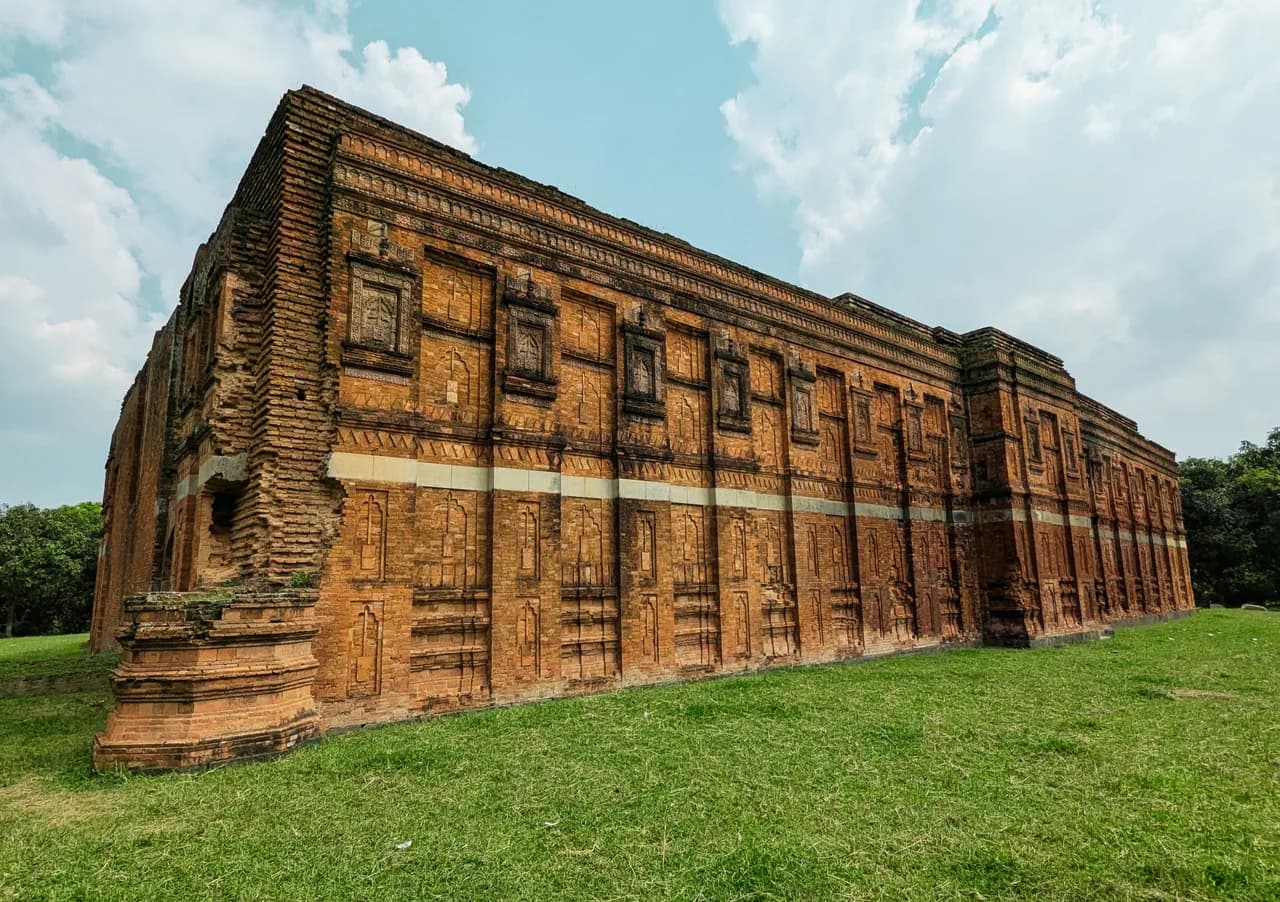
Complete travel guide to Shibganj, Chapai Nawabganj. Discover Chhoto Sona Mosque, Darasbari, Tohakhana, Kansat mango market, transport, and stays. Photo: Masum-al-Hasan Rocky
Shibganj Upazila is an administrative subdivision located in the western border region of Chapai Nawabganj District in northwestern Bangladesh. Situated within the Rajshahi Division along the border with Malda district, West Bengal, India, Shibganj holds significant architectural, archaeological, and agricultural importance.
The upazila contains the eastern remnants of the ancient city of Gaur (also known as Lakhnauti), which served as the capital of Bengal during the medieval Sultanate and Mughal periods. Today, visitors travel to Shibganj to examine 15th- and 17th-century terracotta and stone monuments, explore historical shrines and water bodies, and experience the seasonal mango trade centered around Kansat.
Shibganj at a Glance
District: Chapai Nawabganj
Division: Rajshahi
Administrative Headquarters: Shibganj Town
Key Localities and Markets: Shibganj Bazar, Kansat Bazar, Shahbazpur, Sonamasjid Land Port area, Monakasha, Mobarakpur, Durlabhpur
Geographic Features: Mahananda River, Pagla River, Ganges (Padma) River floodplains, historical dighis (large water reservoirs)
Border Connection: Sonamasjid Land Port (bordering Mahadipur, West Bengal, India)
Historical Significance: Sultanate and Mughal archaeological zone of eastern Gaur; 1971 Liberation War battlefield sites
Why Visit Shibganj
Shibganj provides a dense concentration of medieval Islamic architecture and seasonal agricultural activity in Bangladesh:
Medieval Architectural Heritage: Shibganj houses well-preserved Sultanate and Mughal structures, including Chhoto Sona Mosque, Darasbari Mosque, Darasbari Madrasa, and the Tohakhana Complex.
Ancient Gaur History: The northern and western frontiers of the upazila contain surviving urban gateways, fortifications, and water management structures of ancient Gaur.
Liberation War Memorials: The tomb of Bir Sreshtho Shaheed Captain Mohiuddin Jahangir, a hero of Bangladesh's 1971 Liberation War, is located on the premises of Chhoto Sona Mosque.
Seasonal Mango Economy: Kansat Bazar operates as one of the largest wholesale mango trading hubs in Bangladesh during the summer harvest.
Places to Visit in Shibganj
Chhoto Sona Mosque
Located in Shahbazpur Union near the Sonamasjid Land Port road, Chhoto Sona Mosque (Small Golden Mosque) was constructed between 1493 and 1519 AD during the reign of Sultan Alauddin Husain Shah by a patron named Wali Muhammad. Built with a brick core faced inside and out with carved black basalt stone blocks, the structure measures approximately 25 meters by 16 meters. The roof features fifteen domes, including three central chala-style (vaulted) domes flanked by twelve hemispherical domes. The interior contains carved stone pillars, mihrabs, and a raised ladies' gallery (zenana gallery) in the northwest corner. The mosque gets its name from the original gold gilding that once adorned its domes and finials. It remains an active house of worship surrounded by a paved courtyard and manicured grounds.
Darasbari Mosque
Situated in Chandpur village in Shahbazpur Union, roughly 1 kilometer southwest of Chhoto Sona Mosque, Darasbari Mosque was built in 1479 AD by Sultan Shamsuddin Yusuf Shah. This royal Sultanate mosque features thick brick walls decorated with high-relief terracotta plaques displaying floral, scroll, and geometric patterns. Although its original roof and domes collapsed over time, the massive brick piers, multi-domed prayer hall layout, central nave, and ornate mihrabs remain intact under the protection of the Department of Archaeology.
Darasbari Madrasa
Located approximately 500 meters east of Darasbari Mosque across a local agricultural pathway, the Darasbari Madrasa ruins represent one of the oldest surviving Islamic educational structures in South Asia. Built in 1504 AD during the reign of Sultan Alauddin Husain Shah, the complex consists of a large square brick courtyard surrounded by student cells, lecture halls, and entrance gateways. Historical inscriptions recovered from the site confirm its function as a residential college (madrasa) attached to the royal court of Gaur.
Tohakhana Complex
Located in Shahbazpur Union near Khania Dighi, the Tohakhana Complex is a 17th-century Mughal palace and retreat built by Subahdar Shah Shuja (c. 1655 AD) for his spiritual teacher, Saint Shah Neyamatullah (R). The complex features a two-story brick structure with vaulted underground rooms designed to remain cool during hot summer months, a three-domed Mughal mosque, and an adjacent masonry tank (dighi). The building exhibits typical Mughal architectural features, including plaster decoration, arched entryways, and flat roofs.
Shah Neyamatullah Shrine (Mazar)
Adjacent to the Tohakhana palace and mosque, the shrine of Saint Shah Neyamatullah (R) consists of a single-domed square mausoleum structure surrounded by an arched veranda. Shah Neyamatullah was a respected Sufi scholar who settled in the Gaur region during the Mughal period. The shrine complex continues to serve as an active religious center and place of visitation for pilgrims and regional visitors.
Kotwali Darwaza
Positioned on the international border line between Bangladesh and India in Shahbazpur Union, Kotwali Darwaza is a high brick gateway that served as the southern city gate of medieval Gaur. Built during the Sultanate era to regulate entry into the fortified capital, the surviving archway and massive side bastions demonstrate medieval military architecture. Because of its location directly on the border perimeter, visitor access is regulated by border security authorities.
Dhaniachak Mosque
Located in Shahbazpur Union, Dhaniachak Mosque is a late 15th-century Sultanate brick mosque. The structure features terracotta-decorated walls, multiple entry arches, and corner towers. It reflects the architectural style of regional multi-domed brick mosques constructed during the Husain Shahi dynasty.
Khania Dighi Mosque (Khanjan Dighi Mosque)
Situated beside the large historical reservoir known as Khania Dighi (or Khanjan Dighi) near the Tohakhana area, this late 15th-century single-domed brick mosque is also locally known as the Rajbibi Mosque. Built with red brick and ornamented with terracotta carvings, the mosque features a square main prayer hall fronted by a three-arched veranda on the east.
Tomb of Bir Sreshtho Captain Mohiuddin Jahangir
Located within the courtyard perimeter of Chhoto Sona Mosque, this national memorial marks the burial site of Captain Mohiuddin Jahangir, who was posthumously awarded Bir Sreshtho, Bangladesh's highest military gallantry award. Captain Jahangir was martyred on December 14, 1971, while leading an assault across the Mahananda River to liberate Chapai Nawabganj from occupation forces. Fellow freedom fighter Major Sherajul Haq is buried alongside him.
Kansat Zamindar Bari
Located in Kansat Union along the Rajshahi–Sonamasjid highway, the Kansat Zamindar Bari is a 19th-century residential estate established by local Hindu landlords (zamindars). The surviving structures include a two-story brick mansion with colonial-era arched verandas, decorative masonry work, and internal courtyards. While portions of the building are aged, the estate remains an architectural reference point in Kansat town.
Kansat Mango Market
Operating daily from late May through August, Kansat Mango Market is a major commercial fruit exchange in Bangladesh. Located along the highway in Kansat, the market draws hundreds of growers, wholesalers, and transporters daily. Baskets and truckloads of regional mango varieties—including Fazli, Langra, Khirsapat (Himsagar), Amrapali, and Ashwina—are traded, sorted, and packed for distribution across Bangladesh.
Sonamasjid Land Port Area
Located at the northern terminus of the N707 highway, Sonamasjid Land Port is an international commercial border crossing between Bangladesh and India. While the port area itself functions primarily for freight transport, customs, and trade, the surrounding road corridor connects visitors directly to the nearby archaeological monuments.
History and Heritage
The history of Shibganj is intertwined with the urban evolution of ancient Gaur (Lakhnauti). Gaur served as a capital for regional Bengal dynasties, reaching its architectural peak between the 14th and 16th centuries under the Independent Sultanates of Bengal—specifically during the Ilyas Shahi and Husain Shahi periods.
During this Sultanate era, extensive urban planning transformed the region, producing fortified walls, paved roads, grand congregational mosques, residential colleges, and royal mausoleums. Monuments such as Chhoto Sona Mosque, Darasbari Mosque, and Dhaniachak Mosque date from this period of intense brick and stone construction.
Following the Mughal conquest of Bengal in the late 16th century, the political center shifted periodically between Rajmahal, Dhaka, and Murshidabad. However, Gaur remained culturally significant, as seen in 17th-century Mughal construction such as Subahdar Shah Shuja’s Tohakhana complex. In the 20th century, Shibganj played a direct role in the 1971 Liberation War, serving as a strategic border zone during military operations in the sector.
Nature, Mango Orchards and Rural Landscapes
Shibganj's topography combines alluvial river basins with the elevated clay soils of the lower Barind Tract. The Ganges (Padma) River flows along the western boundary, while the Mahananda and Pagla rivers meander through the upazila, creating seasonal floodplains, agricultural fields, and natural wetlands.
A major feature of Shibganj's landscape is its horticultural coverage. Thousands of hectares of land are dedicated to mature mango orchards. In spring (February to March), the canopy is covered in mango blossoms, while late spring and summer see dense foliage heavy with maturing fruit. Historically excavated water reservoirs, such as Khania Dighi and Balia Dighi, line rural pathways, providing water storage and reflecting the historical urban layout of ancient Gaur.
Local Culture and Food
Local culture in Shibganj is rooted in northern Bengal's agrarian life, trade traditions, and regional folk customs.
Gambhira Performance: Shibganj, like broader Chapai Nawabganj, is a home for Gambhira, a traditional folk performance featuring dialogue, music, and social satire presented by two main characters (Nana and Nati). Performances occur during regional festivals, cultural programs, and harvest celebrations.
Mango Culture: Mangoes form an integral part of daily life and seasonal commerce in Shibganj. During summer, fresh mangoes are consumed alongside rice, milk, or flattened rice (chira).
Kalai Ruti: A staple food of the region, Kalai Ruti is a thick handmade flatbread made from ground black gram (mashkalai) flour and rice flour. It is traditionally cooked on an unglazed clay skillet and served hot with roasted eggplant mash (begun bhorta), green chili chutney, or spiced meat gravy at local bazaars.
Regional Sweets: Local sweetshops in Shibganj and Kansat produce classic Bengali sweets such as Chomchom, Rasogolla, and fresh curd (doi).
Things to Do in Shibganj
Architectural Heritage Tour: Spend a day exploring the Sultanate and Mughal monuments concentrated along the Shahbazpur road corridor, including Chhoto Sona Mosque, Darasbari Mosque and Madrasa, and the Tohakhana Complex.
Pay Homage at the Liberation War Memorial: Visit the tomb of Bir Sreshtho Captain Mohiuddin Jahangir beside Chhoto Sona Mosque.
Experience Kansat Mango Market: Visit Kansat town during June or July to observe the early morning wholesale mango trade, sorting, and packaging activities.
Walk Through Historic Dighis and Countryside: Take rural walking paths around Khania Dighi to observe historical site contexts, brick ruins, and rural farmland.
Sample Regional Food: Stop at local eateries in Kansat or Shibganj Bazar in the evening to eat freshly baked Kalai Ruti served with spiced chutneys and bhorta.
Where to Stay in Shibganj
Commercial hotel choices within Shibganj Upazila are limited, as most private hotel infrastructure in the district is concentrated in nearby Chapai Nawabganj Sadar town. However, public facilities and basic residential rest houses operate within the upazila boundaries.
Parjatan Motel Sonamosjid
Location: Near Sonamasjid Land Port and Chhoto Sona Mosque, Shahbazpur Union, Shibganj Upazila.
Operating Authority: Bangladesh Parjatan Corporation (BPC).
Accommodation Details: Offers basic air-conditioned and non-air-conditioned guest rooms designed for tourists, historians, border visitors, and transit travelers.
Facilities: On-site parking, basic dining services, and immediate proximity to the historical archaeological sites.
Booking: Reservations can be requested through Bangladesh Parjatan Corporation booking channels or directly at the property.
Shibganj Upazila Parishad Rest House
Location: Inside the Upazila Parishad Administrative Complex, Shibganj Town.
Operating Authority: Shibganj Upazila Administration.
Accommodation Details: Government-managed guest rooms primarily designated for visiting public officials, official delegations, and researchers.
Access: Public availability is restricted; staying requires formal permission and advance booking approved by the office of the Upazila Nirbahi Officer (UNO).
Shibganj Zila Parishad Dak Bungalow
Location: Shibganj Town, Shibganj Upazila.
Operating Authority: Chapai Nawabganj Zila Parishad (District Council).
Accommodation Details: Standard government rest house providing simple lodging amenities.
Access: Requires prior official allocation and booking clearance through the Chapai Nawabganj Zila Parishad administrative office.
Local Residential Inns (Abashik) in Kansat and Shibganj Bazar
Location: Commercial market hubs in Kansat Bazar and Shibganj Bazar.
Accommodation Details: A small number of small-scale budget residential inns operate near the main bus stands. These facilities offer basic room options with minimalist furnishings intended for local traders and short-stay budget travelers.
Access: Walk-in inquiries on arrival.
How to Choose Where to Stay
For Historic Site Proximity: Travelers focusing specifically on morning photography and extended visits to Chhoto Sona Mosque, Darasbari, and Tohakhana should consider Parjatan Motel Sonamosjid, located within short travel distance of the main monuments.
For Full Amenities and Commercial Hotels: Because high-end private commercial hotels do not operate inside Shibganj Upazila, visitors seeking broader hotel choices, mid-range amenities, multi-cuisine restaurants, and urban services generally stay in Chapai Nawabganj Sadar town (25 to 30 kilometers south) and visit Shibganj via daily road transport.
Getting to Shibganj
By Road from Dhaka
Long-Distance Bus: Direct intercity buses depart daily from major Dhaka terminals (Gabtoli, Kalyanpur, Technical) bound for Chapai Nawabganj and Kansat/Sonamasjid. Standard non-AC and AC services are available.
Route: Buses follow the N5 highway across Bangabandhu Bridge, proceed through Natore and Rajshahi to Chapai Nawabganj Sadar, and continue north along the N707 highway through Kansat directly to Shibganj and Sonamasjid.
By Train
Railway Connection: The nearest major railway station is Chapai Nawabganj Railway Station, located approximately 30 kilometers south of Shibganj town. Intercity trains, including the Banalata Express, connect Dhaka (Komlapur Railway Station) directly to Chapai Nawabganj and Rajshahi.
Onward Transport: From Chapai Nawabganj Railway Station or the town bus terminal, travelers take local buses, CNG three-wheelers, or hired cars north to Shibganj and Kansat.
Getting Around Shibganj
CNG Three-Wheelers and Auto-Rickshaws: Battery-operated auto-rickshaws and CNG three-wheelers are the primary transport options connecting Shibganj town, Kansat Bazar, Shahbazpur, and Sonamasjid.
Local Buses: Regular local buses ply the main N707 highway connecting Chapai Nawabganj Sadar to Kansat and Sonamasjid Land Port, allowing easy hops between major road intersections.
Motorbikes: Local motorcycle taxis can be hired at main bus stops for quick access along narrow unpaved village tracks leading to remote sites like Darasbari Madrasa or Dhaniachak Mosque.
Best Time to Visit Shibganj
Winter Season (November to February): The optimal period for historical sightseeing and walking tours of archaeological ruins. Temperatures range between 12°C and 26°C with dry weather and low humidity.
Summer / Mango Season (May to July): The best period for travelers interested in agriculture, fruit orchards, and the Kansat mango market. Daytime temperatures frequently exceed 35°C, requiring hydration and sun protection.
Monsoon Season (August to October): Rain refreshes the rural countryside and fills the local dighis, though unpaved village pathways near archaeological sites can become muddy.
Suggested Trip Duration
Full-Day Trip (6 to 8 hours): Ideal for travelers based in Chapai Nawabganj Sadar or Rajshahi. A focused day itinerary allows sufficient time to tour Chhoto Sona Mosque, the Tohakhana Complex, Darasbari Mosque and Madrasa, and stop briefly at Kansat.
Two-Day Trip (1 to 2 days): Recommended for historians, archaeologists, and photographers wishing to explore all secondary Sultanate sites (such as Dhaniachak and Khania Dighi mosques), visit the border gateway at Kotwali Darwaza, and experience morning trade at Kansat Mango Market during peak summer harvest.
Practical Travel Tips
Carry Cash: Automated teller machines (ATMs) operate primarily in Shibganj town and Kansat; rural archaeological zones and small bazaars deal exclusively in cash (Bangladeshi Taka).
Respect Active Religious Sites: Dress modestly and remove footwear when entering active prayer areas at Chhoto Sona Mosque, Tohakhana Mosque, and the Shah Neyamatullah Shrine.
Border Zone Regulations: Be mindful of border security guidelines when visiting sites near the India–Bangladesh border line, such as Kotwali Darwaza and Sonamasjid Land Port. Avoid taking photographs directly facing border security posts or military installations.
Advance Approvals for Rest Houses: If planning to stay overnight at the Upazila Parishad or Zila Parishad rest houses, secure administrative permission prior to travel.
Frequently Asked Questions
Where is Shibganj Upazila located?
Shibganj is an upazila in the western part of Chapai Nawabganj District in the Rajshahi Division of northwestern Bangladesh, bordering West Bengal, India.
What is the most famous historical attraction in Shibganj?
Chhoto Sona Mosque (Small Golden Mosque), built during the Husain Shahi dynasty in the late 15th/early 16th century, is the most prominent historical attraction in Shibganj.
Why is Kansat famous?
Kansat, a locality within Shibganj Upazila, is widely known across Bangladesh for its large wholesale mango market operating during the summer months, as well as the historic Kansat Zamindar Bari.
Can ordinary tourists visit the Tohakhana Complex?
Yes, the Tohakhana Complex is a public archaeological site managed by the Department of Archaeology and is accessible to visitors.
Are there luxury resorts inside Shibganj Upazila?
No, there are currently no commercial luxury resorts operating within Shibganj Upazila. Visitors looking for commercial hotel accommodations usually stay in Chapai Nawabganj Sadar town or Rajshahi City.
How far is Shibganj from Chapai Nawabganj Sadar town?
Shibganj town is approximately 20 kilometers north of Chapai Nawabganj Sadar, while the Sonamasjid archaeological area is about 35 kilometers north of Sadar town along the highway.
What local food should visitors try in Shibganj?
Visitors should try fresh regional mangoes during the summer season and local Kalai Ruti served with roasted eggplant mash or chili chutney at evening bazaars.
Conclusion
Shibganj Upazila in Chapai Nawabganj District holds a central place in the historical and agricultural identity of northwestern Bangladesh. Containing the surviving eastern monuments of ancient Gaur, Shibganj offers visitors direct access to 15th-century Sultanate brick masonry, stone carving, and Mughal palatial architecture at sites like Chhoto Sona Mosque, Darasbari, and Tohakhana. Combined with the vibrant seasonal activity of the Kansat mango economy and rural landscapes along the Mahananda, Shibganj remains a primary historical destination in Rajshahi Division.
Until your next adventure.
— Resortian
About the Author
Nasir Khan
Travel Editor
I’m Nasir Khan, sharing travel stories and destinations around Bangladesh. My blog covers places to visit, experiences, and travel inspiration. Explore Bangladesh one journey at a time with me.